



For a few months now, we’ve been seeing a moderation in enthusiasm on Wall Street for Artificial Intelligence (AI) investment. On several occasions, a major tech company would announce a new multi-billion-dollar investment to acquire chips or other AI technology…or to build huge data centers to train LLMs…only to see their stock value crash. In a nutshell, investors are coming to believe that there is no way AI can hit a level of success great enough to repay the now trillions of dollars of collective investment by big Tech to create it.
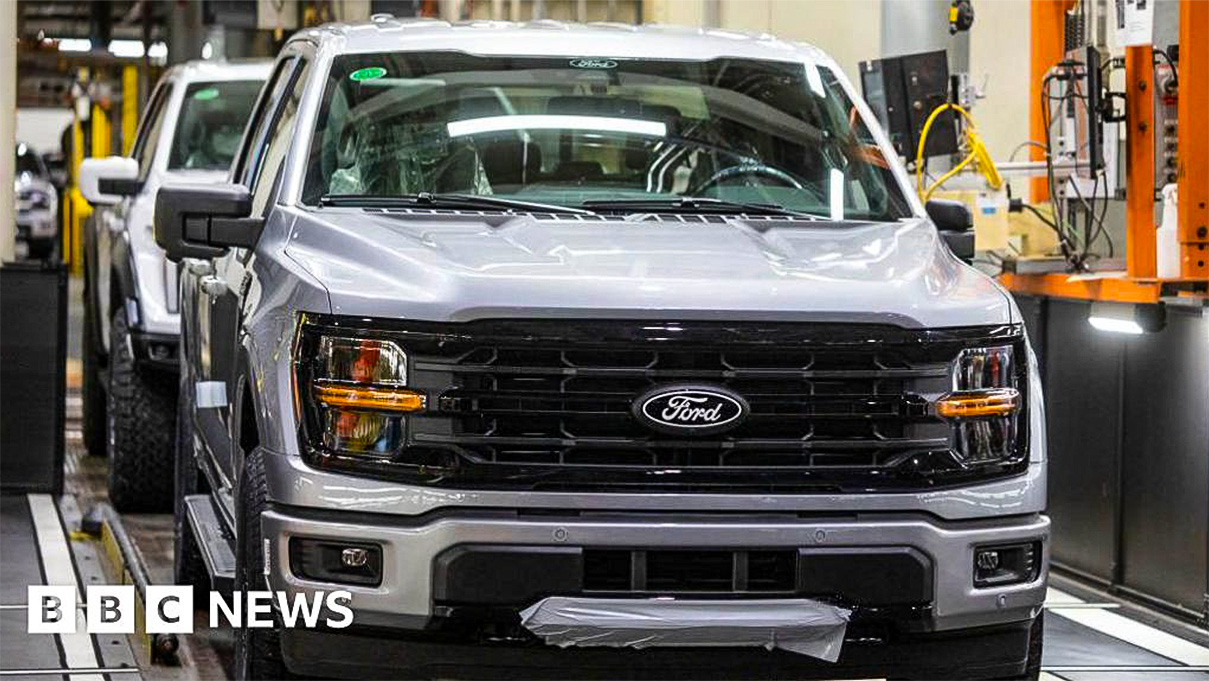
Then, this week, Ford Motor Company announced it would rehire more than 300 engineers who had been let go to turn their jobs over to AI. Ford admits its AI ambitions failed and has rehired these “graybeard” veteran engineers with decades of experience to improve product quality.
Learn how AI attitudes appear to be changing…
First reported by Bloomberg News, and then picked up by the BBC News and other agencies around the world, Ford admitted its ambitious plans to use AI technology to automate product quality were a bust. Now the company has rehired the more than 300 quality control engineers fired in favor of AI. It was a refreshing and honest Mea Culpa by an industrial giant and a warning for others considering releasing skilled human intelligence for automated artificial intelligence.




Failed AI Projects Highlight the Value of Knowledge and Experience
Artificial intelligence is a fantastic tool, but it’s only as good as the information you use to train it. Over prior years, we didn’t pay as much attention as we should have to the eperience of our most knowledgeable engineers that have been with us through many produt cycles.
Charles Poon, Ford Vice President of Vehicle Hardware Engineering to reporters
Like many large companies, Ford bought into the hype surrounding AI. They told reporters they were especially enthusiastic about the technology’s potential to increase margins.
As the BBC reported, in an October earnings call, Ford’s Chief Operating Officer, Kumar Galhotra said the company was “deploying AI across the entire industrial system.”
Turning Quality Control Over to AI ‘Failed to Live Up to Expectations’
In this instance, the company acquired and deployed 900 AI-powered and controlled cameras in its plants “to detect quality issues at the source and help us mitigate supply disruptions,” the COO told investors. But this week, VP Poon admitted that these AI quality checks “failed to live up to expectations.”
[The failure was due to the] automated tools lacking the training and expertise of veteran technicians…
Charles Poon, Ford Vice President of Vehicle Hardware Engineering
After its AI-fueled plans to improve quality failed, the company’s quality ratings slipped measurably. Then it rehired its engineers. This resulted in a measurable improvement in the company’s quality ratings. In fact, Ford won a product quality award – it was recently named the number one mainstream automaker in the U.S. in the JD Power Initial Quality Study.

It Took a ‘Significant Talent Refresh’ to Reach #1 in Quality
The company explained how it reached its highest quality rating since 2010 by saying in a press release that “reaching best-in-class quality required a significant talent refresh. This involved replacing senior leaders across engineering, supply chain and manufacturing,” it said, “as well as hiring the roughly 300 veteran engineers who carry the hard-earned wisdom of decades of design.”
An anomaly? Is this just a one-off exception to the AI rule? Apparently not…CNBC began asking around and discovered several other companies reporting the same or similar type of experience.
Customer Service AI ‘Was Unable to Cope’
In one example uncovered by CNBC, the Commonwealth Bank of Australia (CBA) had cut customer service staff and replaced them with AI voice bots. However, it turned out that the AI system “was unable to cope,” and this actually caused an increase in phone calls to customer service.
The CBA eventually threw in the towel and dismantled the AI system. Like Ford, they rehired humans who were more effective at solving human issues. The company said it “did not adequately consider all relevant business considerations” when it cut staff and switched to AI, acknowledging “we should have been more thorough in our assessment of the roles required.”
After Turning HR Over to AI, IBM Reversed Course, Tripling Hiring
In another example, no less than IBM chose to eliminate human resources staff, turning the functions over to AI. At first, it seemed like it would work, saying AI handled “94% of routine requests.” But the remaining 6% appeared to be beyond AI’s ability to address. For a company of the scale of IBM, that 6% of unaddressed HR issues was a big problem.
Many of the 6% unaddressed issues included ethical dilemmas…not AI’s strong suit. After trying to workshop a solution, IBM decided to reverse course and, instead of cutting jobs, announced it would triple its U.S. entry-level hiring across all business units, including HR.
A research report by Orgvue revealed that 39% of business leaders reported making employees “redundant” (i.e., terminating them) due to AI deployment. But of that number, 55%, a solid majority, admitted that wrong decisions were made in those redundancies.
Orgs are Finding More Value in Human-to-AI Collaboration Versus Replacing Humans Entirely
A separate report by manpower expert Robert Half, found that almost a third of all hiring managers (32%) said they eliminated a role due to AI and later “rehired for the same or a similar position.”
The CNBC report concluded with a finding from a Capitol Technology University study: “AI is changing the workplace, but it’s becoming clear that organizations are finding more value in building human-AI collaboration versus replacing human work entirely.”
I’ll leave it there…



Well AI need prompts, so these engineers are the ones who will ask AI to improve the efficeincy.
This is a great story Ted. Around here (Detroit) the AI revolution is putting many on edge. Hopefully this signals other companies to slow down and realize that AI is nothing more than the world’s largest library of information. I use AI daily to help me shorten my research time and improve my skills. It will never take the place of me, my experience and sill sets (I hope). Since many manufacturers use it to screen resumes I have to use it to get past the gate keeper. After that its human on human.
When you insisted that my article had no AI (good for you), it really made me, and a couple of ghostwriting friends, really work hard to deliver a valuable piece. It was a great exercise.
Randy,
Glad you liked it. It is a cautionary tale in avoiding the inclination to “jump on the bandwagon” in a way that hurts people, is poorly executed, and leaves you in a worse place than you were at the beginning. There is evidence that more are arriving at the same or a similar conclusion.
There is a place for AI…but it’s not necessarily EVERYPLACE.
Ford’s admissions were surprising, honest, and…a warning.
Ted