



Last week, we learned that the status of a major antitrust action filed against Amazon (Nasdaq: AMZN) is changing. Filed by the State of California in San Francisco Superior Court in 2022, the matter is coming closer to fruition with a trial scheduled to begin next year. In the meantime, more salacious details are emerging from the investigation’s findings as previously sealed court documents were recently unsealed.
Some of those details are quite ugly.
See the latest Amazon alleged price fixing details that recently emerged when unsealed by the Court…
According to the action filed against Amazon, the company is regularly engaged in practices that harm competition and increase the prices that consumers pay. How do they do that? Evidence purports to show that Amazon routinely punished vendors doing business with the company whose products were offered for lower prices on other websites. Especially in the case where those “other websites” were either Walmart or Target, competitors with whom Amazon execs appear to be particularly sensitive.




A Slow-Moving Lawsuit is Picking Up Speed
As this antitrust litigation has wound its way through the court, previously sealed documents have become unsealed, providing court watchers with more details on just how one or more of these schemes were conducted. A report by the New York Times noted that in the case of one 16-page filing, Amazon would ask brands to get involved when it found a competitor selling an item at a lower price, or if it was somehow losing money selling an item due to competitive pressures.
In the wake of Amazon placing that pressure on the brand, rival sites would raise their prices on the affected models, according to California investigators.
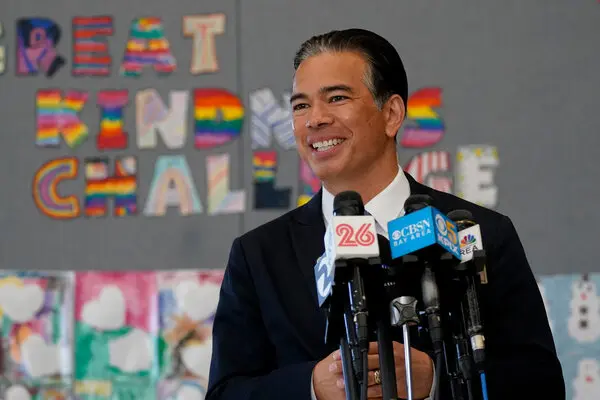
You don’t see price fixing so explicitly and egregiously in writing like this…
Rob Bonta, California’s Attorney General, to NY Times
A Significant Risk for Amazon
Make no mistake, this antitrust action by California is a significant risk for Amazon. California is the fourth-largest economic entity (country?) in the world. And the State says there are 25 million Amazon customers there. That makes the scale of this suit massive, so massive it will almost certainly have national ramifications and could result in the company being forced to change how it does business.
In addition to California, the Federal Trade Commission and 17 other states also initiated litigation against the company in 2026. According to the Times, they are also “accusing the company of illegally maintaining a monopoly in online retail by squeezing merchants who sell on its site and prioritizing its own products,” resulting in “artificially higher prices” impacting and injuring consumers.

A Similar DC Action was Dismissed by a District Judge
An earlier suit brought by Karl A. Racine, the attorney general for the District of Columbia, which also put forth similar allegations to these later actions, was dismissed by Judge Hiram E. Puig-Lugo. The judge determined that Racine “had not provided sufficient evidence that Amazon’s policies were anticompetitive.” Racine is appealing.
I would note here that California began its investigation two years prior to the launch of this litigation in 2022. And that investigation is ongoing. It would seem as though California may have been more successful in collecting a substantial quantity of damaging evidence of anticompetitive behavior by Amazon employees and executives.
A Vendor Assures Amazon It Reached Out to ‘Target and Walmart’ to Raise Prices
Just this past February, according to the Times report, California asked the court for an order to stop Amazon from engaging in the practices that it described as “price fixing,” while the lawsuit proceeds. Then last week, the state released a version of this request that included internal Amazon documents filed previously with redactions, but this time had the redactions removed.
In that version, a copy of an email from an Amazon employee to consumer apparel maker Hanes was included. In that email, the Amazon employee sent links to rival retailers’ lower prices on items it offered. A Hanes employee responded that it had “reached out to Target and Walmart to have the prices increased.”
A ‘Test for the Best Interest of the Marketplace’ by Levi’s
The filing included another example from 2021, where, once again, an Amazon employee emailed two links to a Levi’s employee about khakis on the Walmart website. The email noted that the pants were “styles of concern.” The Times report said that the Levi’s employee replied that “Walmart had agreed to raise the price of one of the products to $29.99 as a ‘test for the best interest of the marketplace.'” Amazon, the report noted, “was charging between $25.47 and $26.99 for some of the slacks,” and eventually it matched the new Walmart prices.
The Times contacted all of these parties for a comment, but received no responses.
There were several other examples in the litigation of how Amazon used both subtle and not-so-subtle threats to manipulate suppliers into controlling market-wide prices on their goods. For example, they might note that an item is costing the massive online behemoth too much money from issuing price-matching credits to customers who acquired products from competitors selling items at lower prices than Amazon.
Another Threat: Amazon Will Need to ‘Take Products Down’
Another tactic is to threaten vendors that Amazon will need to “take products down” as the item was available for a lower price from a competitor. As Amazon is the largest online retailer, its removal of a vendor’s model could represent a significant loss in sales.
One example that was a blend of both of these tactics was a communication from an Amazon employee to a vendor known as Maxi-Matic, in which an Amazon employee informed the company that an item had been “taken down” because it was listed at $17.99 “elsewhere,” down from the market price of $59.99. On the day of this communication, the Amazon employee told Maxi-Matic that it had already lost $7,000 so far that day in price matching.
We ‘Put Best Buy Out of Stock’
From the Times report, the Amazon employee told the vendor, “Amazon ‘cannot sell at this significant loss.'” Maxi-Matic replied back that it had “put Best Buy out of stock” and was “following up” with the electronics retailer.
California’s filing noted unambiguously, “Amazon’s message to vendors is clear: Ensure that prices at other retailers stay high or face consequences.”



Leave a Reply